
March 3 Facilities Work Session Highlights: What the Data Really Show
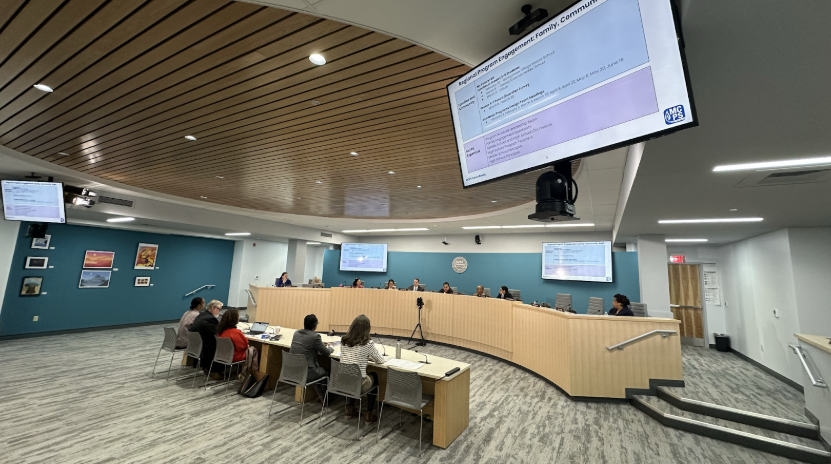
On Tuesday, March 3, the Board of Education held the Spring Facilities and Boundaries Work Session #2 on the Superintendent’s Recommended FY 2027–2032 Capital Improvements Program (CIP), continuing a data-driven discussion about enrollment trends, housing development, long-range facility planning, and the proposed regions and programs plans.
A frequently asked question in public hearings from the community is whether increased housing automatically means increased student enrollment. The data on this is clear: it does not.
Between 2019 and 2024, Montgomery County added 15,925 housing units, yet MCPS enrollment declined by 6,085 students during that same period (8,726, if including 2025 projections). In other words, more units have not translated into more students.
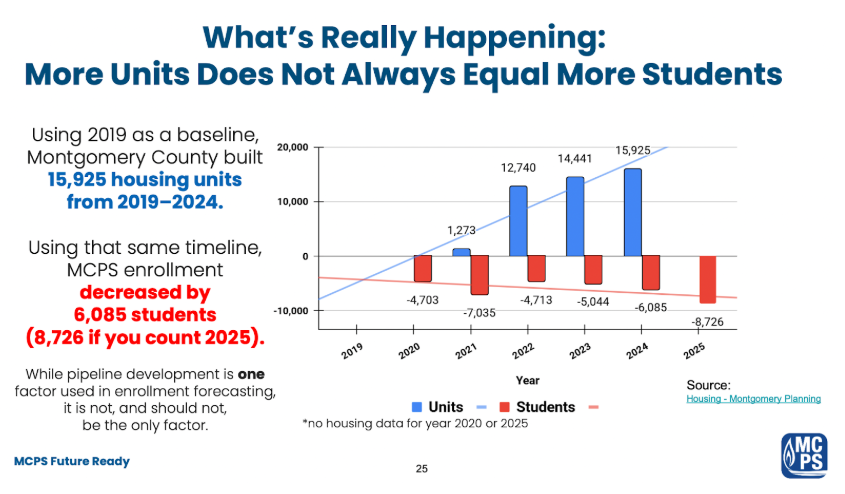
Slide 25 in presentation
The presentation further explained why. Resident live births have declined significantly in the past decade, kindergarten cohorts are now substantially smaller than graduating classes and student generation rates, particularly in multifamily housing, do not produce students at the same levels seen historically. Additionally, many planned developments remain conceptual and are not yet built or permitted, so they are not immediate drivers of enrollment growth.
The takeaway: MCPS projections are grounded in multiple factors, birth data, student generation rates, mobility trends and verified housing pipeline data, not simply the number of approved housing units. Additionally, these factors, among others, point to a decline in enrollment that, by necessity, is factored into MCPS planning for facilities, boundary studies, and more.
Programs Are Part of the Planning
The Board also reviewed the proposed regional high school program model and how it aligns with capacity planning. The presentation demonstrated how local enrollment, regional seats and outbound students attending programs elsewhere are analyzed together. Utilization tables included sensitivity modeling to ensure programs do not overcrowd buildings. The regional model is designed to expand access to themed pathways in every region, balance building utilization, reduce travel distances and strengthen equity through multiple-measure admissions processes.
Community Questions
Throughout this process, families have raised important questions about facilities, boundaries and program changes. The March 3 meeting addressed several recurring themes:
Are you closing Thomas S. Wootton High School?
No. The proposal is to move Wootton High School to the Crown Farm site, not close it. The existing Wootton facility would remain an MCPS asset and serve as a much-needed holding school to accelerate major capital projects across the county.
Will MCPS sell the current Wootton property?
No. Under Maryland law and Board policy, school property is not sold for private development. There is no plan to dispose of the site, and MCPS anticipates continued educational use.
What happens if enrollment exceeds capacity at the new Crown Farm site?
Current projections do not anticipate overcrowding. The Crown Farm site was built to accommodate growth, and the site was planned for a future addition if ever needed.
Why not prioritize Magruder first?
The presentation acknowledged the community’s frustration and clarified that relocating Wootton allows MCPS to preserve limited capital funds and position Magruder as the next major high school project after Damascus. Without a holding facility, renovation timelines and costs across the system would increase significantly.
Why expand Damascus instead of Clarksburg?
Clarksburg is currently well above recommended utilization levels, and adding capacity at Damascus through its planned replacement project is more cost-effective and eligible for state funding than a standalone addition at Clarksburg.
Next Steps and Resources
The Board will take action on the Capital Improvements Program, boundary studies, regional program model and related proposals at its March 26 business meeting.
For more information, view the full presentation and watch the presentation. Additional information can be found on the Boundary Study, Academic Programs Analysis and Capital Improvements Program webpages.