
Media Center Resources for Parents
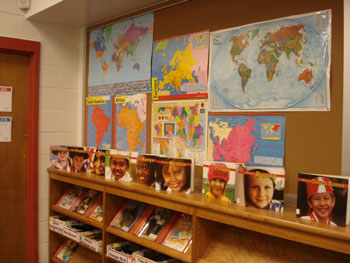
Media Center
School Library Media Learner Outcomes:
| Students will be able to... | One example of this is... |
demonstrate an appreciation of literature and reading |
selecting a book to read for pleasure |
locate resources to meet an identified need |
finding a book on soccer moves to practice for a game |
gather relevant information from appropriate resources |
taking notes from a web page that discusses foods of the Wampanoag for a report on the first Thanksgiving |
organize and manage information found in print, non-print, and computer/online resources |
reviewing notes from a movie on Isaac Newton for a lesson in physics; selecting those related to his laws of motion and disregarding irrelevant information |
interpret information to generate new understandings and knowledge |
reading a biography about Rosa Parks.; then realizing that one persons actions can be a catalyst for change |
communicate findings by producing materials in an appropriate format |
creating a power point presentation for a research project on Paraguay |
demonstrate responsible attitudes toward the use of information |
citing all sources used for a report |
Frequently Asked Questions About Reading!
- Is reading really important?
Absolutely! Reading expands vocabulary, increases comprehension, improves grammar and teaches us about life. Not to mention, everything your child doesin school requires reading to some extent. As reading levels increase, so does academic achievement, but more importantly, becoming an avid reader will give them an advantage in just about everything they do throughout their entire lives. Readers are achievers!
How can I help my child become a better reader?
Don’t forget that you are the greatest influence in your child’s life! They look up to you, they COPY you! Read in front of them, read to them, have a family reading time (just 20 minutes a day will work), encourage them to read, give them time to read, and most of all, help them find books they love! The bottom line is that you become a better reader simply by reading. Forget all the fancy tools and new theories, just read!
- How can I get my child to read better quality literature?
This is a valid fear but trust me, they won’t read Captain Underpants forever! This is purely developmental and allowing your child to go through these stages will help them in the long run. In addition, any print materials such as comic books and magazines still have more challenging vocabulary than most spoken conversations! Suggest new titles but don’t force it upon them. Allow them to read what they enjoy most and gradually ease up to more quality selections. The worst thing you can do is to force your child to read something they don’t want to – they will begin to associate reading with torture, not pleasure!
- What if my child brings home a book I don't approve of?
Materials that are acceptable to some parents are rejected by others. Every parent has their own set of standards, and media specialists do not want to interfere with your job as parents. Only parents or guardians can decide what your children should read, see and listen to.
Media specialists and librarians are not in the position of censoring materials. Our goal is to provide a wide selection and range of materials to a diverse population who has many different beliefs, attitudes, behaviors, morals, cultures, language etc. If your child comes home from the media center with something you don’t like or approve of, please speak to your child about it. Most of the time parents ask them to return it to the media center with the understanding that they will get something different next time.
Online Resources
 Did you know that MCPS subscribes to multiple online resources made available to every student? A few of these wonderful resources include...
- Encyclopedia Britannica (various editions available including other languages)
- Culture Grams
- Pebble Go!
- SIRS (Discoverer)
- World Book
Did you also know that students can access these wonderful resources from home?
Every student was given a list of log-ins and passwords to take home. If your child and/or you do not have a copy, simply contact me, Catherine O'Hara.
Students consistently use these resources during school. To access them from home, simply visit the following link:
MCPS - For Students - Homework Resources
Why not just "Google" to get information?
Google can be very helpful depending on what you're looking for. It is great for locating certain types of information, but it is not the best choice for academic research. Remember that anyone can put anything on the internet. Just because you see it on a website, does NOT mean it's valid or accurate.
The online resources are subscription databases whose information has been researched by professionals, reviewed and written for students.
WHEN YOU USE A WEBSITE, be sure to look for the following:
- Who/what is the source? Is this a reliable organization like National Geographic, or is it someone who just happened to take an interest in elephants? If you can't find the author listed on the site, that's you're first warning!
- What are the qualifications of the person or people who are giving out this information? Are they scientists, historians, teachers, or students? What information can you find out about them? You should be able to find out all this as well as contact information.
- hen was the site last updated? A date should be posted and visible.
- What is the intention of the website? Are they trying to sell something, entertain you, persuade you, or just objectively inform you?