Home →Departments→ Science
Science
STAFF
| Science |
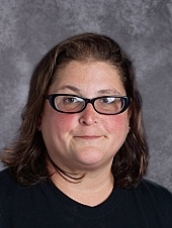
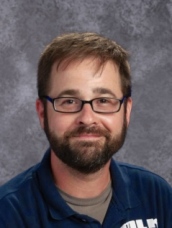
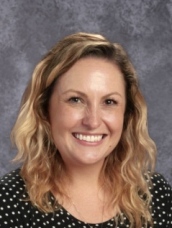
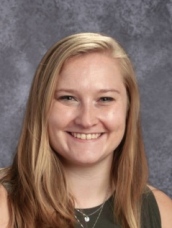
Jamie Jenkins, RT
Lorraine Armbruster
Victoria English |
Donald Isley
Myke Allred |
November Science Updates:
6th grade is wrapping up their first unit of study this month and will be taking their first county assessment. Please look out for review materials and testing dates for your child. The test will cover habitats, classification, adaptations, ecosystems, symbiotic relationships, photosynthesis, energy pyramids, the carbon and nitrogen cycle, and photosynthesis. County tests are multiple choice questions with one or two Brief Constructed Responses (BCR).
7th grade students are still investigating cells. Their cell projects were fantastic! Students have been busy comparing specialized cells to single-celled organisms. They used microscopes to look at amoeba, paramecium, and euglena. Soon students will be investigation cell transport.
8th grade students are finishing up their weather unit by analyzing the formation of serve weather and looking at climate change. They will be taking their first county assessment this month. Please look out for review materials and testing dates. The test will cover layers of the atmosphere, air pressure, heat, wind, the water cycle, precipitation, clouds, air masses, fronts, severe weather, and changes in climate. Application questions will include reading weather maps and predicting weather. County tests are multiple choice questions with one or two Brief Constructed Responses (BCR).
8th grade students are also anticipating a visit from an ABC7 Meteorologist on November 19th. This visit will include an introductory Q & A on the science of meteorology and a discussion on cloud formation, a presentation on a day in the life of a TV Meteorologist, and a DVD presentation about the ABC7 StormChaser. Finally, students will be able to go outdoors and take a look at the StormChaser.
COURSE BULLETIN INFORMATION
All students are required to take a science course. Students will be identified as G/T based upon grades in previous science classes, teacher recommendations, and parent recommendations.
Investigations in Science Grade 6 (Full Year)
This curriculum is a unique problem/project based curriculum. The learning is student-centered with the teacher acting as a facilitator. Instruction is woven around one main problem within each unit of study. Minds-on inquiry and hands on explorations, productive discourse, purposeful reading and meaningful writing will guide the students through this exciting Science course. Students will investigate ecosystems, diversity and adaptations of organisms, forces and motion, energy, and light and sound. The projects involved in the course are designing a butterfly habitat for the restoration of the Checkerspot Butterfly species, designing a going green solution to a variety of environmental problems created from natural resource use, creating a bumper that reduces the peak force during a collision effectively absorbs energy decreasing the amount of energy that is transferred directly into a car’s occupants during a collision, and designing a solar collector.
Science - Grade 7 (Full Year)
This course focuses on inquiry, observation, and investigation. Students investigate the structure and function of living things, cells, heredity, light and sound, astronomy, and scientific problem solving. Students are also engaged in performance based activities along with additional readings from expository texts.
Science - Grade 8 (Full Year)
This course is an organized study of selected problems in the physical and earth sciences. Phenomena are demonstrated and the results are analyzed and examined. Unit topics are: earth’s structure, earth’s history, atmospheric phenomena, introduction to chemistry, and scientific problem solving. A recurrent theme is increasing student awareness about their impact on the local environment and relating this awareness to human impact on the earth. Students are also engaged in performance based activities along with additional readings from expository texts.
Science Grade 8 – Gifted and Talented (Full Year)
The objectives in G/T science will be the same as those in the Science 8 curriculum. Students are heterogeneously grouped (mixed ability levels) in classes. Those students identified as G/T will receive instruction that will draw on higher order thinking skills, which will include in-depth analysis, synthesis and evaluation. The differentiated instruction may include using higher level reading texts, alternative assessments, and research projects.